




Web Desk Feb. 21, 2026, 5:29 a.m.
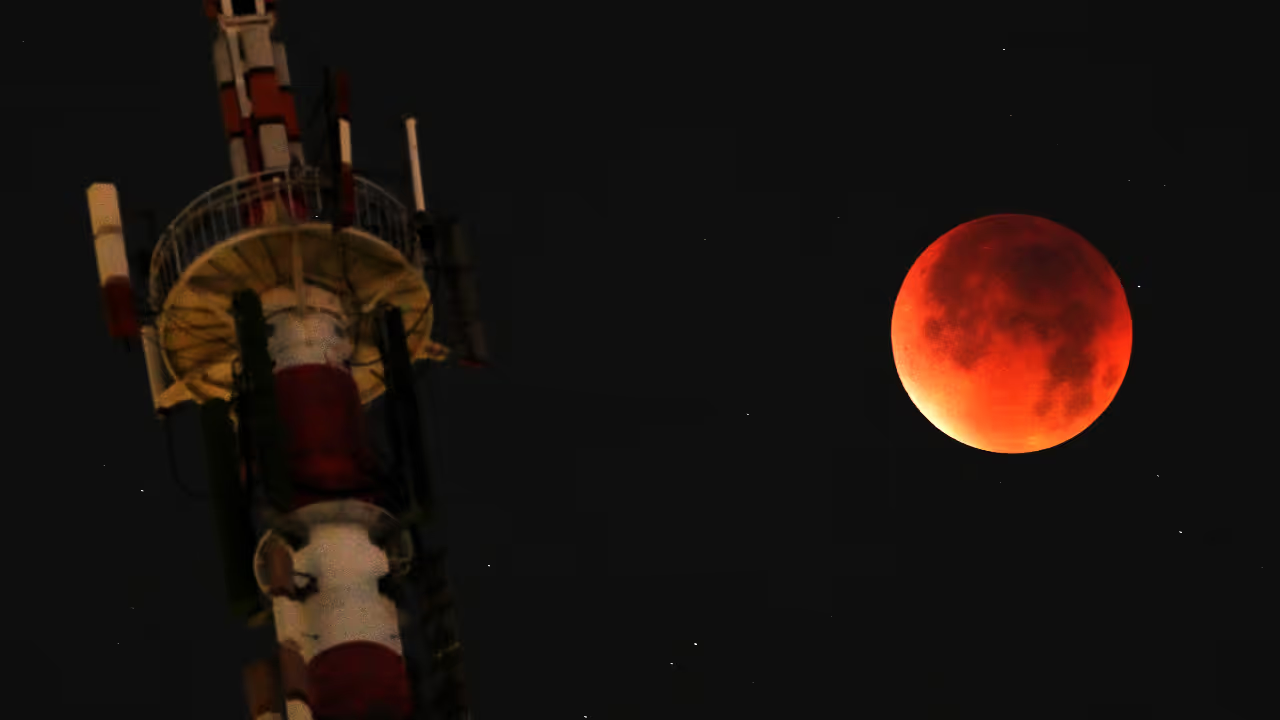
California: Skywatchers across the United States are eagerly awaiting the total lunar eclipse scheduled for March 3, 2026. The rare celestial spectacle, which will be visible early Tuesday morning, will not be seen again anywhere in the US until 2029. Ahead of the total lunar eclipse, NASA's Scientific Visualization Studio has released detailed maps and timelines of where the eclipse will be seen in various states in the US. Amazing total lunar eclipse coming The full moon in March is traditionally known as the 'Worm Moon'. This name refers to the beginning of spring, when the soil melts and the worms emerge from the ground again. This is the third and final full moon of the Northern Hemisphere winter. Moonrise will occur at dusk on March 2. But the real wonder begins on the morning of March 3. A total lunar eclipse occurs when the moon completely enters the Earth's umbra. During this phase, the moon turns an intense red color. This is commonly called a "blood moon." A total eclipse lasts for more than five hours. However, the most notable total phase lasts for 58 minutes and 15 seconds. All phases of this eclipse can be safely observed with the naked eye. The experience is even more vivid when viewed with the help of a telescope or binoculars. Lunar eclipse visibility time The total phase will be visible at different times in different time zones in the United States. The eclipse will be visible from 6:04 to 7:02 AM Eastern Time, 5:04 to 6:02 AM Central Time, 4:04 to 5:02 AM Mountain Time, 3:04 to 4:02 AM Pacific Time, 2:04 to 3:02 AM Alaska Time, and 1:04 to 2:02 AM Hawaii Standard Time. The eclipse is likely to continue even after the moon sets in the eastern states. The moon will be more clearly visible in the western states at higher altitudes. After this March eclipse, the next total lunar eclipse will be visible to the world on December 31, 2028. North America will see another total lunar eclipse on June 26, 2029. Reports say that a partial eclipse with 93 percent coverage will occur on August 27–28, 2026, but it will not have the beauty of the total eclipse in March.




ADVERTISEMENT
%20164%20X%2082.gif)